
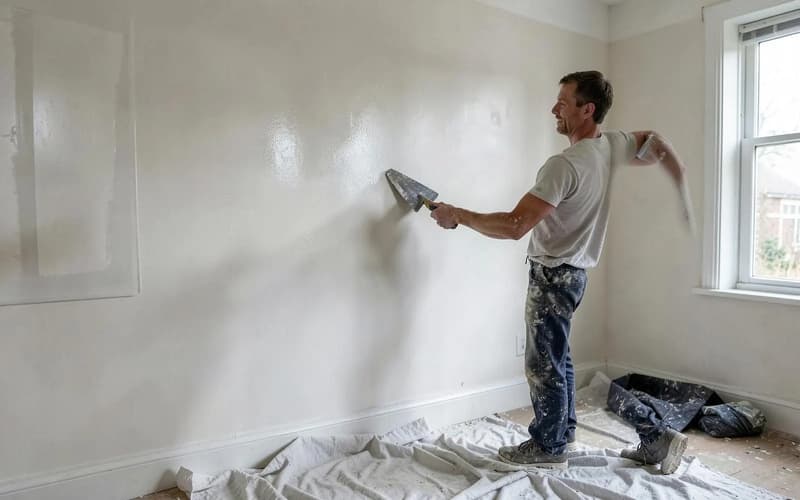
Plastering
Skimming Over Artex and Textured Ceilings
Yes, an artex ceiling can usually be made smooth without scraping it off. Once a sample has been tested, we either apply a bonding coat and skim straight over the texture or fix new plasterboard beneath it and skim that. Both leave a flat, paintable ceiling.
Why textured ceilings are covered rather than scraped
Swirls, stipples and combed patterns were popular for decades because they hid uneven boards and hairline cracks. Getting rid of the look does not mean getting rid of the coating. Scraping or steaming it off is slow, messy and, if the material contains asbestos, the wrong thing to do yourself. Covering it is normally quicker, cleaner and gives a better surface to paint.
Once the options are clear, a skim or an overboard is usually the simpler choice. If you still want the coating taken off completely, the artex ceiling removal guide explains what that involves.
Test a sample before anything is disturbed
Textured coatings applied before the year 2000 may contain asbestos, and you cannot tell by looking. A small sample should be tested for asbestos before the ceiling is sanded, drilled, knocked back or scraped.
If the result is clear, we can plan the plastering. If it is positive, asbestos removal is a separate specialist job carried out by a licensed or suitably trained contractor, and we will not disturb the coating. In some cases a positive ceiling can still be left in place and boarded over, but that decision belongs with the specialist, so ask them first.
How skimming over artex works
Where the texture is sound and the test is clear, the ceiling can take a skim directly. The steps are straightforward but each one matters:
- Sharp peaks are knocked back with a scraper so the finish coat is not too thick in places
- Loose or flaking patches are cut out and filled
- A bonding primer or grit coat is rolled on so the plaster grips the painted texture
- Joints and cracks are scrimmed with tape where needed
- One or two finish coats are applied and trowelled flat
One coat or two?
Deep patterns usually need two coats; a light stipple may disappear under one. We confirm which applies at the visit.
When reboarding is the better choice
Skimming relies on what is underneath being solid. If the ceiling is bowed, cracked along the board joints, stained from an old leak or sounds hollow when pressed, plaster alone will not cure it. In those cases we screw new plasterboard through to the joists, tape the joints and skim the new surface. The texture stays sealed behind the boards and the ceiling gets a fresh, flat face.
Overboarding lowers the ceiling by roughly the thickness of one sheet of board plus the plaster, which is rarely noticeable in a standard room. Where the ceiling has bigger problems than texture, our ceiling repair service covers patching and full replacement as well. For a broader comparison of a skim and a full replaster, see skimming vs replastering.
Coving, lights and the room on the day
Existing coving can sometimes stay and be skimmed up to, but if it is cracked or the new surface would leave an uneven line, we can take it down and fit new coving afterwards. Ceiling roses and light fittings are disconnected and loosened so we can plaster behind them, then refitted when the ceiling is finished.
Before we start, furniture is moved out or grouped and covered, floors are sheeted and doorways are masked. Knocking back texture creates some dust, so we keep it contained to the room as far as we can, and we leave the property clean at the end of each day. You will be kept updated on how the ceiling is drying.
New plaster needs to dry fully before it is painted, which typically takes from several days to a couple of weeks depending on thickness, heating and ventilation. The first coat should be a thinned mist coat. Our decorating service can take it from there if you would rather not paint it yourself.
Textured walls as well as ceilings
Artex was not only used overhead: hallways and chimney breasts often have it too. The approach is the same: test first, then bond and skim, or dry line the wall.
Ask for a free quote
Send us a few photos of the ceiling and tell us whether a test has already been done. We will arrange a visit, look at the condition of the surface and give you a free written quote for a skim or an overboard. All of our plastering is part of our wider plastering service and comes with a 1-year workmanship warranty. Call 01268 206409, message us on WhatsApp on 07432 013707 or use the contact page.
Understand the coating before disturbing it
Read does Artex contain asbestos? for professional assessment, accredited laboratory testing and general HSE precautions before planning work on a textured ceiling.
Frequently asked questions
Can you plaster straight over artex?
Often, yes. Once a sample has tested clear, high points are knocked back, a bonding primer is applied and the ceiling is skimmed in one or two coats. If the ceiling underneath is cracked, bowed or loose, it is better to overboard first.
Do I have to get the artex tested first?
We strongly recommend it for any textured coating applied before 2000. Skimming still involves scraping off peaks and drilling for fittings, so a test tells everyone whether the material can be disturbed. A positive result means a specialist needs to advise before any work goes ahead.
Will the ceiling be lower after overboarding?
Only very slightly. A new layer of plasterboard and a skim coat add a small amount of depth, which you will not usually notice in an ordinary room. Coving and door frames near the ceiling are checked at the visit so the finish lines up.
Can you remove my coving and put new coving up?
Yes. If the old coving is cracked or would sit badly against the new surface, it can come down before plastering and new coving can be fitted and decorated once the ceiling has dried.
How soon can I paint a freshly skimmed ceiling?
Wait until the plaster has dried to an even pale colour with no darker patches. That depends on the room and the season. Start with a watered-down mist coat so the paint soaks in and bonds, then apply your normal coats.
How much does it cost to deal with an artex ceiling?
It depends on the room size, the depth of texture, whether the ceiling can be skimmed or needs overboarding, and whether a test has already been done. We quote the recommended option in writing.
Ready for a smooth ceiling?
Free quotes, clear pricing and a 1-year workmanship warranty.
Free, no obligation
Get your free quote
Tell us about the property and the work you need. Robert will come back to you with honest advice and a clear price.