
Landlord and agent guide
Damp or Condensation? Telling Them Apart
Damp is the most argued-about subject between landlords and tenants, largely because three different problems get called the same word and only one of them is about how the property is used.
Condensation
Black speckled mould in corners, around window reveals and behind furniture on external walls, worse in winter, worse in bedrooms and bathrooms. This is warm moist air meeting a cold surface. It is caused by a combination of moisture production, poor ventilation and cold spots, and it is fixable.
The fix is extraction that actually works, background ventilation, and dealing with cold bridging. Telling a tenant to open the windows more is not a repair strategy.
Penetrating damp
A defined patch, often on one wall, present in any season and worse after rain. Something outside is letting water in: a failed gutter, cracked render, a blocked cavity, defective pointing or a leaking downpipe. Find the external defect, fix it, let the wall dry, then replaster.
Rising damp
A tide mark to roughly a metre above floor level on a ground-floor wall, sometimes with salt deposits. Genuinely far rarer than it is diagnosed. Check first for a bridged or buried damp proof course, raised external ground levels or a path laid above the DPC, because those are the usual culprits and much cheaper to address.
Why painting over it fails
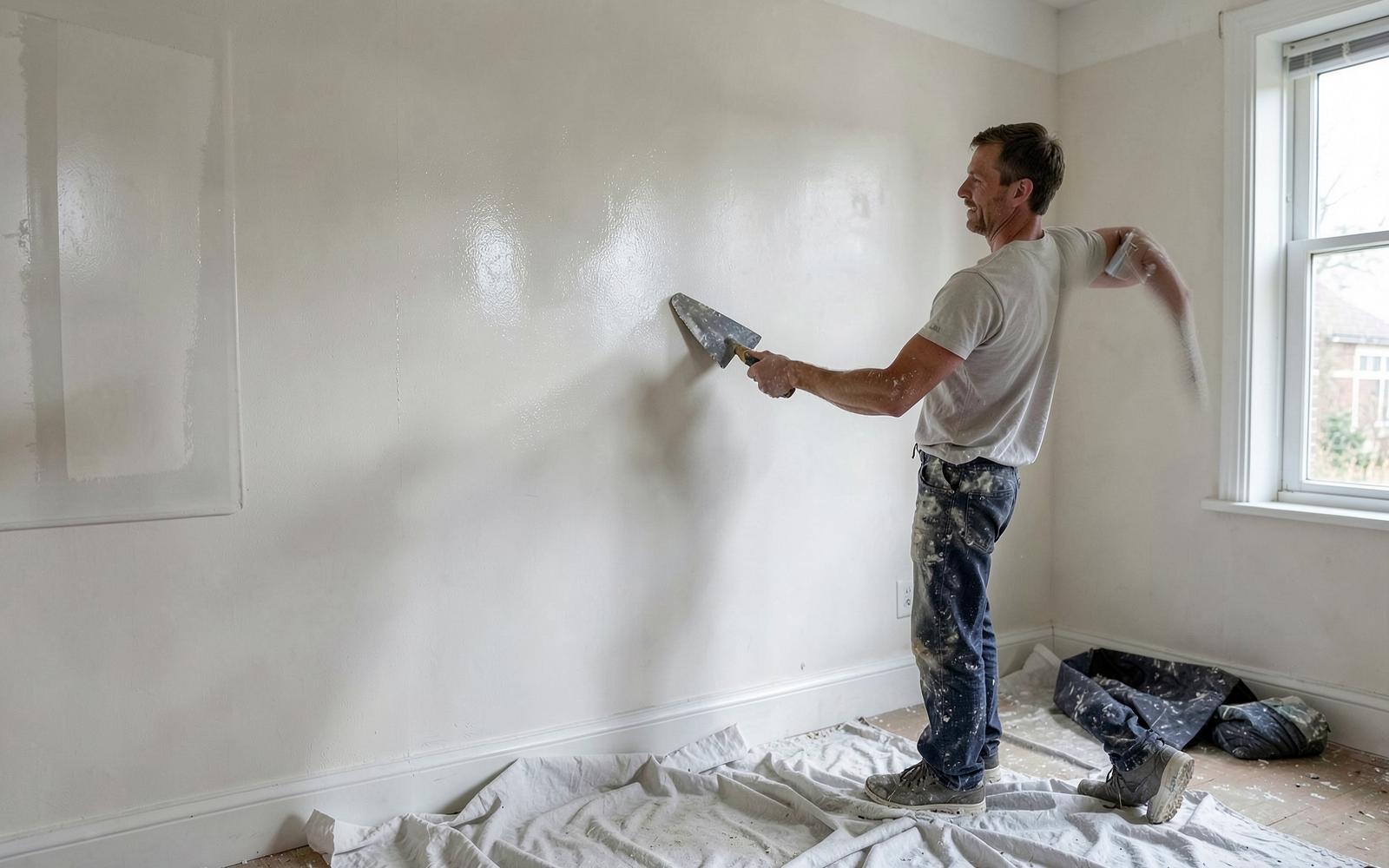
Mould-resistant paint and stain block treat the surface. If the cause is still there, the moisture is still there, and the patch returns within a season, usually just before the tenant complains again. Diagnose first, fix the cause, then decorate.
Frequently asked questions
Is damp the landlord's responsibility or the tenant's?
Building defects causing penetrating or rising damp are the landlord's. Condensation is usually shared: the landlord provides adequate ventilation and insulation, the tenant uses it.
Will a dehumidifier solve condensation?
It manages the symptom while it is running. Working extraction and dealing with cold spots is what actually resolves it.
How long should a wall dry before replastering?
After the cause is fixed, allow weeks rather than days. Replastering a wet wall guarantees the repair fails.
Do I need a damp specialist survey?
Sometimes, but check the simple external causes first. A great many damp diagnoses turn out to be a blocked gutter or a raised path.
Can you fix damp and redecorate as one job?
Yes, though the decoration follows the drying period rather than the same week, and we will programme it honestly.
Services related to this guide
Prefer a straight answer over the phone?
Free quotes, clear pricing and a 1-year workmanship warranty.
Free, no obligation
Get your free quote
Tell us about the property and the work you need. Robert will come back to you with honest advice and a clear price.