
Problem guide
Leaking bath: finding the cause and fixing it
Written by Robert, DK Construction Ltd
Last updated:
A leaking bath usually comes from one of five places: the sealant where the bath meets the wall, the waste and trap underneath, the overflow, the taps, or the pipes below the floor. Where the water shows itself is the biggest clue to which one it is.
Signs the bath is leaking
The obvious sign is water on the floor after a bath or shower. Less obvious ones are a stain or bubbling paint on the ceiling of the room below, a musty smell near the bath panel, grout or sealant that keeps going mouldy in the same spot, and floor tiles or laminate near the bath that have started to lift or darken.
A slow leak can run for months before it shows, because water escapes under the bath and soaks into the floor structure first. By the time a ceiling stain appears, the floor around the bath may already need repair, so it is worth investigating early signs rather than waiting.
Failed sealant along the bath edge
The joint between the bath and the wall is the hardest working seal in the bathroom. Every bath moves slightly when it is filled and stood in, and over time that movement cracks or pulls the sealant away. Water then runs down the back of the bath and out onto the floor, often appearing some distance from the actual gap.
Resealing is a proper repair when it is done fully: the old silicone is cut out completely, the joint is cleaned and dried, and fresh sanitary silicone is applied. Smearing new sealant over old is a temporary disguise, not a fix.
Waste, trap and overflow leaks
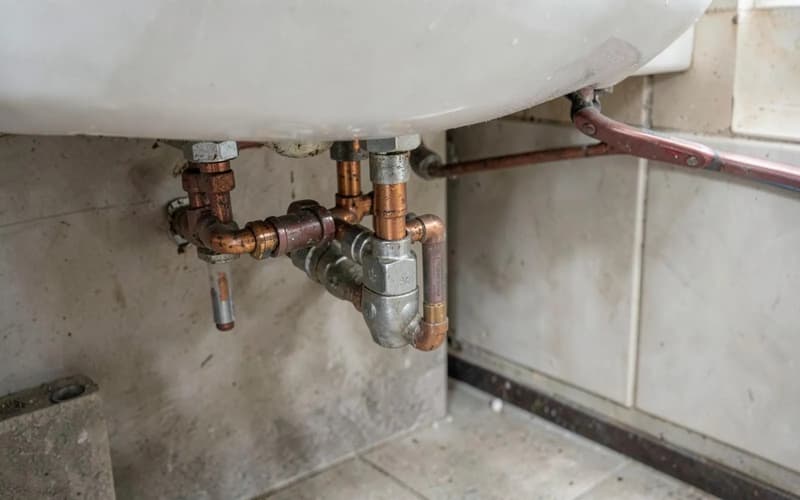
Under the bath, the waste fitting and trap can weep at their joints, and the rubber seal between the waste and the bath itself perishes with age. The overflow fitting behind the bath can do the same. These leaks only show when the bath is emptied or filled above the overflow, so they are easy to miss.
Checking them means removing the bath panel, drying everything underneath and watching while the bath is filled and emptied. Repairs are usually a new seal, a refitted waste or a replacement trap, and the floor underneath is checked for damage at the same time.
Taps and pipework below the floor
Dripping bath taps are annoying but harmless to the fabric of the house. The supply pipes and joints feeding them, and the waste pipe running under the floor, are not: a slow leak there soaks the floor structure out of sight. Signs include a stain on the ceiling below that appears even when the bath has not overflowed, or a meter that moves when nothing is running.
Tracing these leaks can mean lifting a section of floor or cutting an inspection hole in the ceiling below, which sounds drastic but is far better than guessing. Our guide on what to do about a leak in the ceiling covers the safety side.
Cracked baths
Acrylic and plastic baths flex, and if a bath was never properly supported underneath, the flexing eventually cracks it, usually around the waste or along the base. Water then escapes every time the bath is used. A cracked bath cannot be repaired reliably for the long term and normally means a bath replacement, with the floor and any damage underneath made good at the same time.
What to do first
Stop using the bath until you have a rough idea where the water is coming from. If the ceiling below is staining or dripping, keep out of that room and read our leak in the ceiling guide. Dry the floor around the bath, remove the bath panel if it comes away easily, and run a short test: a few centimetres of water emptied slowly will show a waste leak, while running the shower against the wall will show a sealant leak.
Take photographs of anything wet or stained before it dries. They are genuinely useful when describing the problem and getting a sensible quote.
Need it sorted? Book a bath repair or replacement
We trace the leak, repair the cause and make good any damage to the floor or the ceiling below, all within one team. Where the bath itself has failed, our bath replacement service covers the swap from strip out to sealing, and our bathroom fitting page covers wider work on the room. If the water is coming from a shower over the bath, our guide to leaking shower causes and fixes is the better starting point.
Quotes are free and in writing, and the repair carries our 1-year workmanship warranty. Call 01268 206409 or send photographs through the quote form.
Frequently asked questions
How do I know if my bath is leaking or the shower is?
If water appears when the bath is filled or emptied, suspect the waste, overflow or bath itself. If it appears when the shower runs against the wall or screen, suspect the sealant, grout or the shower valve. Drying everything and testing one at a time separates them.
Can a leaking bath be repaired without replacing it?
Usually, yes. Failed sealant, waste seals, traps and overflow fittings are all repairable. A cracked bath is the exception: it cannot be repaired reliably and normally needs replacing.
Is a small leak under the bath urgent?
It should not be left. A slow leak soaks the floor structure over weeks and can rot boards and joists, turning a simple seal repair into floor repairs and a new ceiling below.
Will you repair the ceiling below as well?
Yes. Once the leak is fixed and the structure has dried, we reboard, plaster and decorate the ceiling below as part of the same job.
How much does it cost to fix a leaking bath?
It depends entirely on the cause: resealing is at the simple end, while waste or pipe repairs and any floor or ceiling damage add to it. We inspect first and give a free written quote so you know the cost before any work starts.
Services related to this problem
Related guides
Prefer to talk it through first?
Free quotes, clear pricing and a 1-year workmanship warranty.
Free, no obligation
Get your free quote
Tell us about the property and the work you need. Robert will come back to you with honest advice and a clear price.