
Service
Plaster Repair for Walls
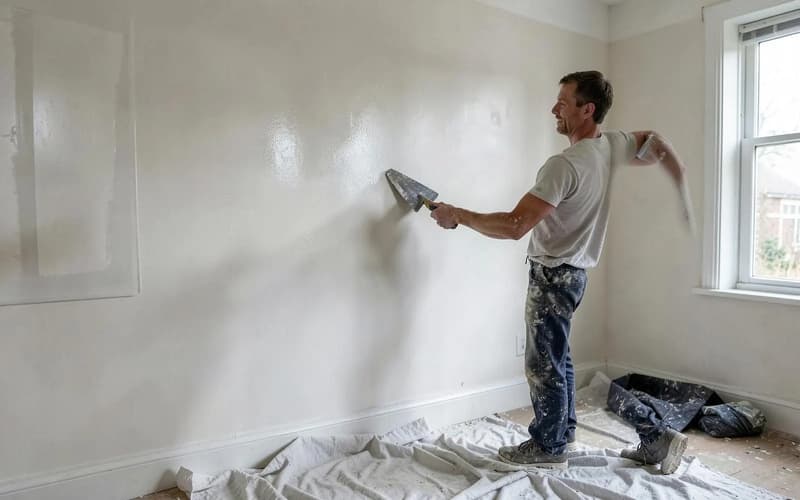
Plaster repair can restore a damaged wall without automatically replastering the whole room. The useful repair depends on what has failed: a small impact mark, loose plaster, a chase from altered services or a crack that continues to move. Establish the cause before selecting the patch.
Separate wall damage from the underlying cause
A dent from furniture and a crack that keeps opening should not receive the same assumption. One may be a local surface defect; the other can involve movement, moisture or a failed background. Describe when it appeared, whether it has changed and what work has occurred nearby. Photographs of the whole wall help place a close-up crack in context.
This page concerns wall patching within plastering. Overhead damage has its own ceiling repair page because support, access and falling-material risks differ. A wall repair should not be expanded into a ceiling method just because both surfaces have plaster.
Determine how much plaster remains sound
A visible hole can sit beside plaster that is no longer attached securely. The repair needs a stable boundary, not just a neatly shaped opening filled over loose edges. Inspection should consider the depth and condition of the background, along with any old layers that might interfere with the new material. Unstable plaster cannot be made reliable merely by painting it.
Where the damage extends further than it first appears, local patching may no longer be the sensible scope. Discuss whether a limited repair, a larger section or a fresh skim over a suitable surface best matches the condition and intended finish.
Patching after alterations and service chases
Changes to sockets, pipework or fixtures can leave channels and openings in a wall. Confirm that the related service work is finished and safe before making good. A patch over unfinished wiring or plumbing may need reopening, wasting preparation and decoration. The depth of the opening and background determine the repair build-up.
Record concealed service locations and any changes in wall construction. New board beside existing plaster may need an appropriate junction detail. The aim is a stable repaired surface, not a thick application that hides a transition without considering how the materials meet.
Cracks and recurring movement
Hairline cracking can be confined to a finish, but width alone is not a diagnosis. Patterns, progression and associated sticking doors or visible distortion can require further assessment. Where structural movement is suspected, obtain suitable professional advice before cosmetic work. Filling repeatedly is not a way of proving the wall is stable.
For a non-structural repair, the chosen materials and preparation should suit the background and the cause. An old unsuccessful patch provides useful information about what did not last. Mention previous fillers, mesh or recurring lines rather than treating every new visit as the first time the crack has appeared.
Blend the repair and plan decoration
A repaired patch can be flat yet remain visible if the surrounding paint has a different texture or sheen. Feathering and preparation need to be considered alongside the intended decoration. Painting only the patch may leave a noticeable difference, particularly in strong side lighting. Decide whether local making good or redecoration of the whole wall is required.
Plaster repair cost depends on the area, depth, condition and access, not just the length of a crack. Use the quote form with photographs, the history of the defect and details of any damp. Say whether painting is included in your request so the finished expectation is clear from the start.
Frequently asked questions
Can a wall patch be invisible without repainting the wall?
Not always. Paint age, sheen and surface texture can make a local touch-up noticeable. Agree the decoration scope as well as the plaster finish.
Why has a filled wall crack come back?
Movement, an unstable background or an unsuitable earlier repair may remain. The recurrence should be assessed before another cosmetic fill is selected.
Should plaster repairs wait until electrical alterations are complete?
Yes, confirm connected service work is finished and safe to cover. Otherwise the wall may need reopening after the patch has been prepared and decorated.
When is a wall repair more than a small patch?
Loose surrounding plaster, extensive damage or a poor background can enlarge the required area. Assess the sound boundaries rather than measuring only the visible hole.
Related services
Helpful guides
Need plaster repair for walls booked in?
Free quotes, clear pricing and a 1-year workmanship warranty.
Free, no obligation
Get your free quote
Tell us about the property and the work you need. Robert will come back to you with honest advice and a clear price.