
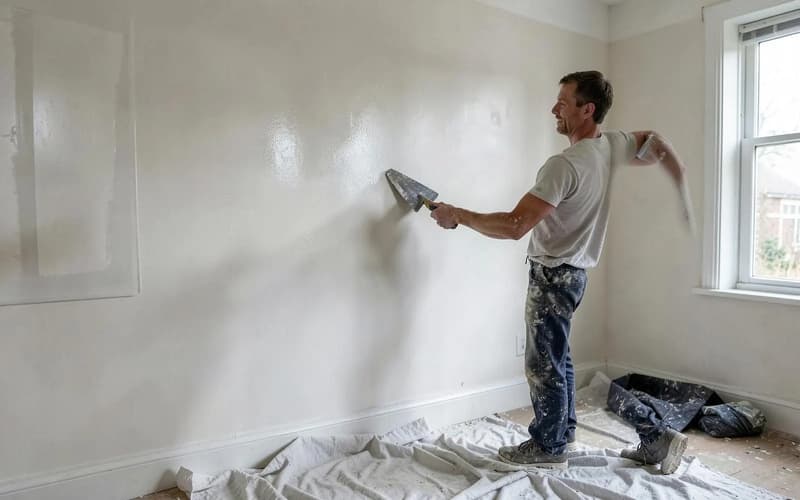
Plastering
Plasterers Romford
Harold Hill's LCC estate was built between 1948 and 1958, following Collier Row's interwar growth and the earlier Gidea Park Garden Suburb. For plasterers Romford enquiries, these different histories make the actual backing and later alterations more useful than a single age label. DK Construction Ltd's existing plastering service covers the repair discussion. A desired smooth finish should remain separate from damp, failed material or suspect ceiling coatings that need assessment first.
Harold Hill walls and earlier housing phases
The LCC's Harold Hill estate dates to 1948 to 1958. Gidea Park's Garden Suburb was built in 1910 to 1911, while Collier Row developed through interwar estates. That sequence helps describe a Romford home without inventing its plaster type. A repaired wall can include earlier backing, later boarding and openings left by service work; explain the history you know and show the surrounding finish.
Across Havering, semis accounted for 41.2% and terraces 24.3% at Census 2021. These local-authority proportions do not establish the construction of a particular party wall or ceiling. In a retained interior, identify features that should survive repair. Gidea Park and the town centre have conservation areas; any relevant consent question should be checked with Havering rather than assumed from a modern painted finish.
Keep tenancy decoration and plaster repair apart
Where an agent is arranging work between occupiers, explain the authorised scope and who approves changes. Scuffs may belong in the decorating brief, while broken plaster around an old fixing belongs in the preparation discussion. A checkout photograph records a symptom, not necessarily its cause or the correct repair. State whether the intended finish is a complete wall or a limited repaired area.
A skim coat needs a suitable background. It should not be specified as a universal covering for detached plaster, persistent damp or unknown ceiling material. Read skimming versus replastering for the difference between a finishing layer and replacement of failed backing, then describe the actual condition of the rooms.
Repairs around altered openings
Removed shelves, changed doorways and opened service routes can interrupt the surrounding plaster. Identify the dimensions of the affected area and whether adjacent trim stays. Making good a narrow opening and finishing a complete wall are different scopes, particularly where light from a nearby window will emphasise transitions. Explain the appearance you want rather than assuming any patch will disappear under paint.
Our plastering service covers the wider trade information. If a wall has been affected by a leak, its source must be resolved and the material assessed before closing it up. Tell us what repair has already taken place and distinguish confirmed facts from a suspected explanation for the staining.
Ceilings need their own condition record
Cracks across a ceiling, an old textured coating and damage below a bathroom should be described individually. Sagging or loose material is not an ordinary cosmetic skimming request; avoid the affected area and seek appropriate assessment. With suspect textured coatings, accredited assessment and testing must come before disturbance, with UKAS accreditation covering the relevant survey scope and laboratory analysis.
Do not scrape or sample a coating yourself. Neither overboarding nor skimming is automatically safe over suspect material. This page makes no asbestos removal claim. Keeping that information in the enquiry ensures that a desired smooth finish does not obscure the need to establish what the existing ceiling contains and how it should be approached.
Agree preparation and the next finish
The Romford area hub links related maintenance trades, including decoration after repairs. State whether the rooms are occupied, which furniture remains and whether wall-mounted fittings are to stay. Use the quote form with the postcode and labelled photographs. Include the intended finish and any access deadlines as preferences for discussion, not promised completion dates. Drying and coating readiness depend on the materials and conditions, so painting should follow assessment rather than an assumed same-day programme.
Frequently asked questions
Can a Harold Hill ceiling be assigned a material from the estate dates?
No. The estate's 1948 to 1958 construction period gives context, but later changes may have replaced or covered the ceiling. Describe visible condition and known work, and keep suspect coatings separate for assessment before disturbance.
What should a Gidea Park conservation-area plaster brief retain?
Identify mouldings, openings and finishes that should remain, together with any relevant Havering advice. Conservation status and the exact proposed work need checking; neither removal nor a particular modern replacement should be assumed acceptable.
Do Havering’s semi-detached figures justify skimming every room?
No. The 41.2% semi-detached share is across Havering, not a condition survey of Romford walls. Distinguish worn paint from insecure backing, and decide between local repair, skimming and replacement based on the actual surfaces.
How should a Rom-corridor flood-damaged wall be described?
Give known flood history, current moisture and any work already completed. In flood-zone properties, the suitability of ground-floor materials may need separate advice. A plaster finish should follow assessment, not be used to conceal an unresolved moisture source.
Related pages
Discuss your Romford repair list
Free quotes, clear pricing and a 1-year workmanship warranty.
Free, no obligation
Get your free quote
Tell us about the property and the work you need. Robert will come back to you with honest advice and a clear price.