
Homeowner guide
Toilet replacement cost: what goes into the price
Written by Robert, DK Construction Ltd
Last updated:
The cost of replacing a toilet depends mainly on three things: the style of toilet you choose, whether the new pan lines up with the existing waste, and what condition the floor and tiling are in once the old one comes out. A like-for-like swap is a short job. Changing style or position is not.
Toilet replacement cost factors
Labour is driven by how much has to change around the toilet, not the toilet itself. Removing the old suite, fitting a new one on the same waste and reconnecting the supply is routine. Costs rise when the outlet does not line up, the floor is rotten underneath, the tiles stop short of the new footprint, or the cistern needs concealing behind a new wall.
- The style: close-coupled, back-to-wall or wall-hung
- Whether the new outlet meets the existing soil pipe
- The floor and wall finish around the old footprint
- Isolation valve and supply pipe condition
- Removal and disposal of the old suite
Close-coupled, back-to-wall and wall-hung
A close-coupled toilet has the cistern sitting on the pan and is the simplest to fit. A back-to-wall pan has its cistern hidden in furniture or a boxed-in section, so the boxing or unit is part of the job. A wall-hung toilet is held off the floor on a steel frame inside a built-out wall, with the cistern concealed. That means building and boarding the frame, tiling the new wall and setting the flush plate, so it is closer to a small bathroom alteration than a swap.
Waste position and pan connectors
Pans have different outlet heights and distances from the wall. If the new one does not meet the soil pipe directly, an offset or extended connector bridges the gap. Where the soil pipe itself needs moving, or the old joint is cracked or cemented in, the work takes longer. Checking the outlet measurements before you buy a toilet saves surprises.
Floor and tiling around the old toilet
Old toilets often leave behind a different coloured patch of floor, screw holes, or a gap where tiles were cut around the old pan. A new pan with a smaller footprint will not cover them. Where a toilet has leaked for a long time the floorboards beneath may be soft and need replacing before the new one is fixed down.
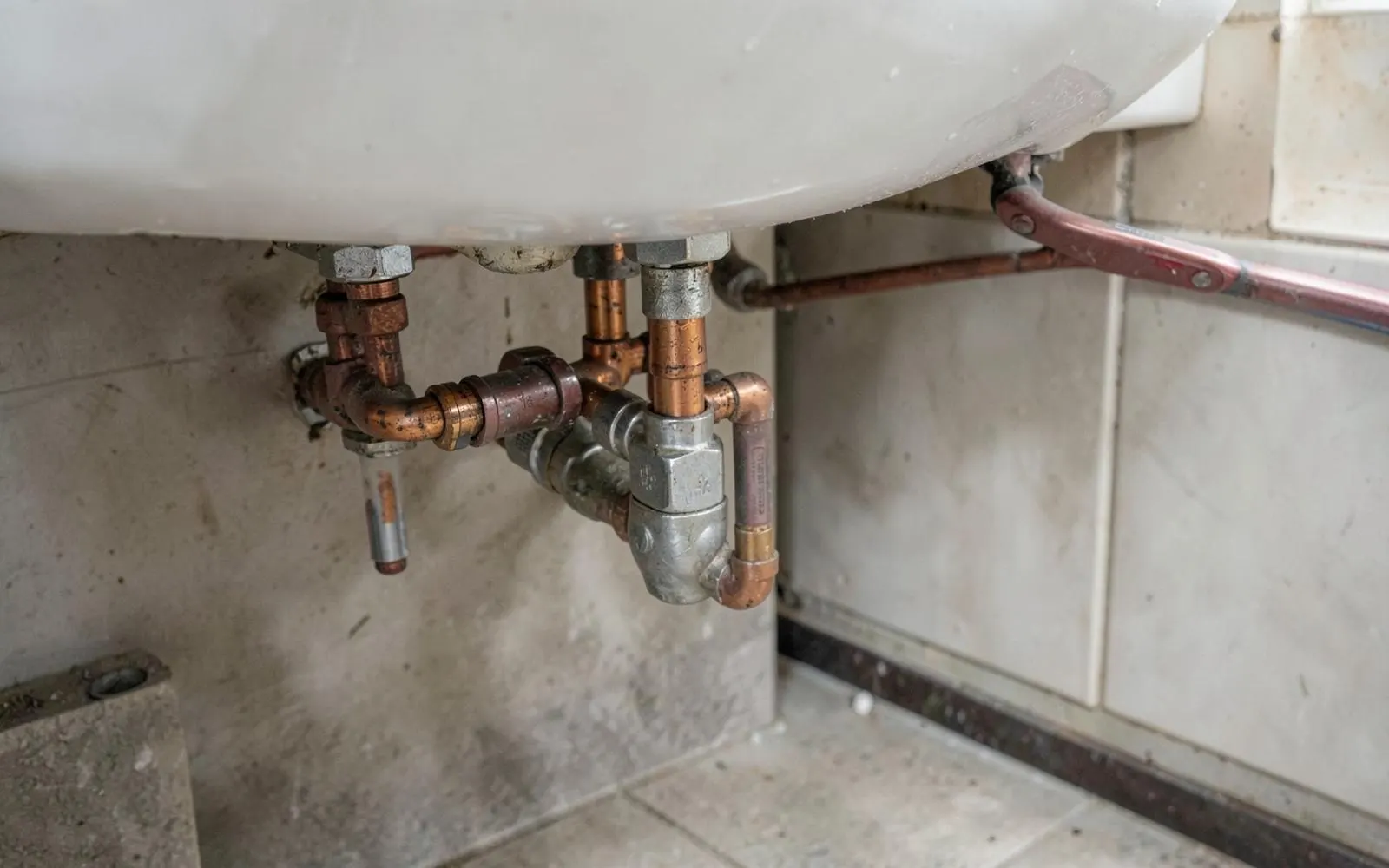
When comparing replacement models, look beyond the photograph of the finished toilet. Keep the model details alongside a picture of the existing waste connection and the surrounding floor. A concealed cistern changes the wall finish as well as the plumbing, while a different pan shape changes how much of the old floor becomes visible. These are separate parts of the scope, even when the toilet itself looks similar.
Removing and disposing of the old suite
Taking out the old toilet, capping the waste temporarily and removing the ceramic from site are part of a proper quote. If you are buying the toilet yourself, tell us the model so we can check the outlet, the fixings and the cistern connections in advance.
A useful quote separates the chosen fitting from the alterations needed to install it. Check whether the work described is a direct replacement, includes a changed connector, or also covers boxing, boarding and tile repairs. If a damaged floor is suspected but cannot be seen until removal, ask how that uncertainty is recorded. Comparing those descriptions gives you a clearer basis for choosing than comparing a headline total for two differently specified jobs. It also helps you decide whether to keep the current style or include the toilet in a wider bathroom project.
Replace the toilet now, or as part of a bathroom renovation?
If the rest of the room is in good order, replacing just the toilet makes sense. If the floor, tiles and basin are all tired, it is often better value to plan the toilet into a full refit so the floor and walls are finished once. Our bathroom renovation cost guide explains how a full room is priced, and our bathroom fitting service covers the whole job. For a single swap, our plumbing team can quote, and if the old one is leaking, read leaking toilet: where the water is coming from first.
Frequently asked questions
How long does it take to replace a toilet?
A like-for-like close-coupled swap is usually done within a few hours. Wall-hung toilets, new boxing, waste alterations or floor repairs extend that, and we confirm the time in the quote.
Is a wall-hung toilet harder to fit?
Yes. It needs a frame fixed to the wall or floor, a built-out wall to hide the cistern, and tiling over the new surface. It is a bigger job than a standard swap.
Will a new toilet cover the old floor marks?
Not always. Pans vary in footprint, so a smaller one may leave old marks, holes or tile cuts visible. We check this at the quote visit.
Do you take the old toilet away?
Yes. Removing and disposing of the old suite is included in our quotes for toilet replacement.
Related guides
Prefer a straight answer over the phone?
Free quotes, clear pricing and a 1-year workmanship warranty.
Free, no obligation
Get your free quote
Tell us about the property and the work you need. Robert will come back to you with honest advice and a clear price.